
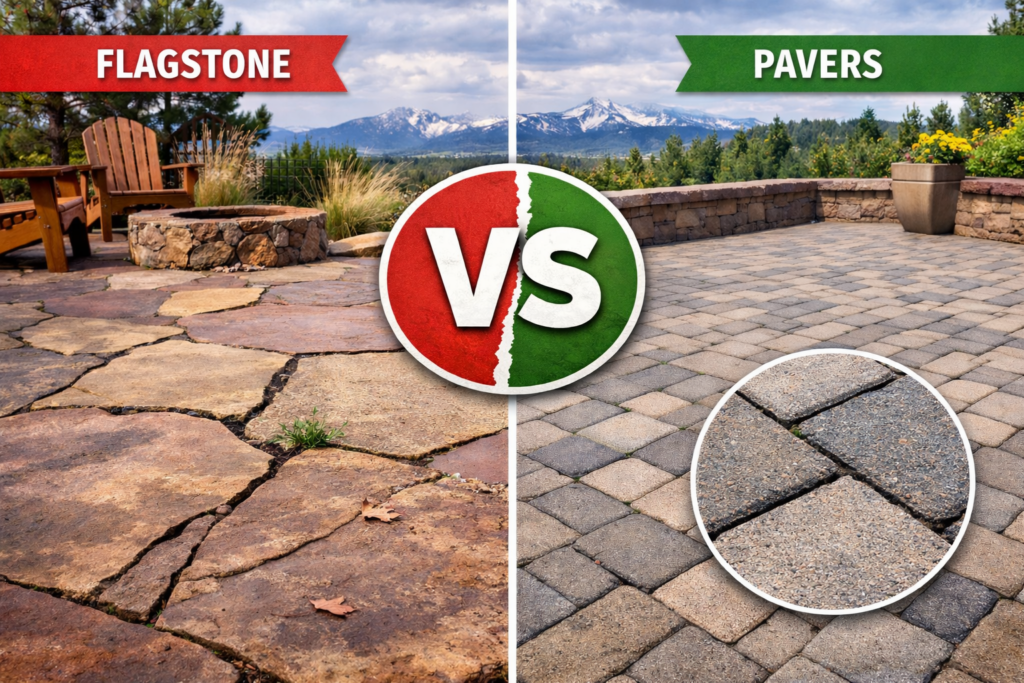
Homeowners throughout the Denver Metro area frequently ask the same question when planning a new outdoor space:
Should I build my patio with natural flagstone or with concrete pavers?
Both materials can create beautiful patios, walkways, and outdoor living areas. Each has its own look and style that appeals to different homeowners. However, when you consider durability, maintenance, and long-term performance in Colorado’s climate, there are some important differences that homeowners should understand before making a decision.
At Stone Creek Hardscapes & Design, we install both paver patios and flagstone patios throughout communities like Highlands Ranch, Centennial, Littleton, Parker, Castle Rock, and Cherry Hills Village. While we work with both materials, most homeowners ultimately choose interlocking concrete pavers because they perform better over time in Colorado’s freeze-thaw environment.
Let’s take a closer look at how flagstone and pavers compare.
What is Flagstone?
Flagstone is a natural sedimentary stone that is quarried and cut into flat slabs. It is commonly used for outdoor patios, garden paths, and stepping stones because of its natural appearance.
Each piece of flagstone is unique in shape, thickness, and color. When installed together, the irregular pieces create a natural, rustic patio surface that many homeowners find attractive.
Common types of flagstone used in Colorado include:
- Sandstone flagstone
- Bluestone flagstone
- Quartzite flagstone
Because flagstone is a natural material, the pieces are usually installed with joints filled with sand, mortar, or polymeric sand to stabilize the stones.
Flagstone patios have been used for decades and can look beautiful when installed correctly.
However, natural stone also comes with some challenges, especially in climates like Colorado
What Are Interlocking Concrete Pavers?
Concrete pavers are manufactured paving stones designed specifically for outdoor hardscape construction. They are made using high-strength concrete and pigments that create consistent shapes, colors, and textures.
Unlike flagstone, pavers are engineered to lock together when installed on a properly prepared base.
A typical paver installation includes:
- Excavation of the existing soil
- A compacted gravel base
- Bedding sand
- Interlocking pavers
- All exterior Pavers set in cement to hold everything in place
Because the system is flexible, pavers can move slightly with the ground without cracking. This flexibility is one of the main reasons pavers perform so well in areas with heavy freeze-thaw cycles like Colorado.
Durability in Colorado’s Climate
One of the biggest differences between flagstone and pavers comes down to how they handle Colorado weather. The Denver Metro area experiences:
- Freeze-thaw cycles in winter
- Expansive clay soils
- Temperature swings throughout the year
These conditions can be tough on outdoor surfaces
Flagstone Performance
Flagstone slabs can shift or settle over time as the ground moves beneath them. Because each stone is irregular and sits independently, it is common for joints to loosen or stones to become uneven.
Homeowners often notice issues such as:
- Stones rocking or moving
- Gaps forming between stones
- Mortar joints cracking
- Weeds growing between stones
Natural flagstone also varies in thickness, which can make it harder to maintain a perfectly level surface over time.
Paver Performance
Interlocking pavers are designed specifically to handle soil movement. Because they lock together and sit on a compacted base, the entire system works as a flexible surface rather than individual stones. If small ground shifts occur, the pavers move together rather than cracking.
This flexibility makes pavers especially well-suited for:
- Colorado winters
- freeze-thaw cycles
- shifting soils
When installed properly, a paver patio or driveway can last for decades with minimal structural issues.
Maintenance Differences
Maintenance is another area where pavers often outperform flagstone over the long term.
Flagstone Maintenance
Flagstone patios can require periodic upkeep. Over time homeowners may need to address:
- Loose stones
- Joint material washing out
- Re-grouting mortar joints
- Weed growth between stones
Because each piece is unique and irregular, repairing flagstone surfaces can sometimes require removing and resetting individual stones.
Additionally, natural stone can shed small particles or dust, which sometimes gets tracked into the house.
Flagstone Maintenance
Pavers generally require less maintenance once installed.
Most paver systems use polymeric sand in the joints, which helps prevent weeds and erosion. Occasionally homeowners may need to refresh the joint sand after many years, but the overall structure remains stable.
Another advantage is that individual pavers can be removed and replaced if needed without disturbing the rest of the patio.
For example, if underground utilities need repair or a section settles slightly, the pavers can be lifted and reinstalled without replacing the entire surface.
Appearance and Design Options
Both materials offer beautiful design possibilities, but they create different styles.
Flagstone Style
Flagstone patios have a natural, organic appearance. The irregular shapes and varying colors give the patio a rustic look that blends nicely with gardens and natural landscapes.
Many homeowners like flagstone for:
- cottage-style landscapes
- natural garden paths
- informal outdoor areas
Because every stone is unique, no two patios look exactly the same
Paver Style
Concrete pavers provide a more structured and refined appearance. They are available in many shapes, textures, and colors that allow designers to create a wide range of patterns.
Popular paver patterns include:
- Herringbone
- Running bond
- Basket weave
- Random modular patterns
Modern pavers can even mimic the look of natural stone while still providing the durability of engineered materials.
This combination of durability and design flexibility is one reason pavers have become one of the most popular patio materials in Colorado.
Long-Term Value
When homeowners invest in an outdoor patio or walkway, they usually want something that will last for many years without constant repairs.
While both materials can be beautiful initially, pavers often provide better long-term value.
Because paver systems are flexible and repairable, they tend to maintain their appearance and structure longer than many flagstone patios.
Over time, this can mean:
- fewer repairs
- less maintenance
- longer lifespan
For many homeowners, that durability makes pavers the better long-term investment.
When Flagstone Can Still Be a Good Choice
Despite the advantages of pavers, flagstone can still be a good option for certain projects. Some homeowners strongly prefer the natural appearance of stone and are willing to accept the extra maintenance that can come with it.
Flagstone can work well for:
- garden paths
- decorative stepping stones
- small patios with a natural landscape design
When installed properly on a stable base, flagstone patios can still provide many years of enjoyment. At Stone Creek Hardscapes & Design, we occasionally install flagstone patios when homeowners specifically request them.
However, most clients ultimately choose pavers once they understand the differences in durability and maintenance
Why Many Colorado Homeowners Choose Pavers
Across the Denver Metro area, paver patios and driveways have become increasingly popular for several reasons.
Homeowners appreciate that pavers offer:
- long-term durability
- resistance to cracking
- flexible installation systems
- wide design options
- easier repairs if needed
Because pavers are engineered for outdoor hardscapes, they tend to handle Colorado’s challenging climate better than many natural stone surfaces.
For homeowners looking for a patio that will remain stable and attractive for decades, pavers are often the preferred solution.
Professional Installation Makes the Difference
Whether you choose flagstone or pavers, the quality of the installation is just as important as the material itself.
Proper excavation, base preparation, drainage, and edge restraint are essential for any long-lasting patio or walkway.
At Stone Creek Hardscapes & Design, we focus on building outdoor spaces that are both beautiful and structurally sound. Our team installs paver patios, walkways, driveways, and outdoor living areas throughout communities across the Denver Metro area.
With thoughtful design and precision installation, we help homeowners create outdoor spaces that enhance their homes and provide lasting value
Final Thoughts: Flagstone vs Pavers
Both flagstone and pavers can create beautiful outdoor patios and walkways. Flagstone offers a natural, rustic look that some homeowners love. However, it can require more maintenance over time and may be more prone to shifting or joint issues.Interlocking concrete pavers provide a durable, flexible system that performs extremely well in Colorado’s freeze-thaw climate. They offer consistent appearance, strong structural performance, and easier long-term maintenance.
For these reasons, many homeowners throughout the Denver area ultimately choose pavers for their patios, walkways, and driveways.
If you’re planning a new patio or outdoor living space and would like professional guidance on choosing the right material, the team at Stone Creek Hardscapes & Design is happy to help.
We provide expert design and installation for paver patios, driveways, walkways, and custom outdoor spaces throughout the Denver Metro area.